The dash ammeter on my 78 Bronco does not work. All of the other dash gauges work. My Bronco has a 351 Cleveland Engine. The charging system seems to work. The battery voltage with the vehicle off was 12v and it went up to 14.5v with the engine running. All fusible links around the regulator visually look good and not burnt. The only odd thing I see is there is there is a wire terminated with a bullet connector that connects to the connector attached to the regulator. I'm not sure if this is a test point or if it is supposed to be connected to something. I don't see any other bullets connector under the hood that this would connect to.

You are using an out of date browser. It may not display this or other websites correctly.
You should upgrade or use an alternative browser.
You should upgrade or use an alternative browser.
Dash Ammeter will not work
- Thread starter jbdkz
- Start date
Disclaimer: Links on this page pointing to Amazon, eBay and other sites may include affiliate code. If you click them and make a purchase, we may earn a small commission.

Seabronc
New member
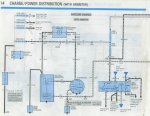
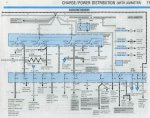
I don't know how it was done for a 78/79, but the attached diagram is how it was done in the 80s. It uses a shunt system connection which runs a small portion of the current through the ammeter in one direction or the other depending on what is going on with the battery charging system which in turn is supposed to let you know if the alternator is keeping up with the demands put on it by the electrical system. If you drawing more than the alternator can put out, it will show that the battery is discharging to supply the short fall, indicating a discharge. If the battery charge is down and your alternator can handle the load including charging the battery it will show on the plus side. When the battery is fully charged and the alternator is handling the electrical load with no problem it will show in the middle.
Good luck,
 >-
>-
Good luck,
>-Looking at schematic, my 78 also uses a shunt across the ammeter connection. The ammeter must actually be a voltmeter that measures the voltage difference between the shunt terminations. The higher the current the greater potential voltage drop across the shunt causing the ammeter to move farther in one direction or another. If the shunt where blown then I don't believe the battery would charge.
The ammeter in my 78 always shows in the middle no matter if the vehicle is on or off. It could be that it reads in the middle because as you said the battery is fully charged and the alternator is handling the electrical load. Maybe I could use by battery load tester to simulate a load and see if I can get the ammeter to move.
Thanks for your insight.
John
The ammeter in my 78 always shows in the middle no matter if the vehicle is on or off. It could be that it reads in the middle because as you said the battery is fully charged and the alternator is handling the electrical load. Maybe I could use by battery load tester to simulate a load and see if I can get the ammeter to move.
Thanks for your insight.
John
I don't know how it was done for a 78/79, but the attached diagram is how it was done in the 80s. It uses a shunt system connection which runs a small portion of the current through the ammeter in one direction or the other depending on what is going on with the battery charging system which in turn is supposed to let you know if the alternator is keeping up with the demands put on it by the electrical system. If you drawing more than the alternator can put out, it will show that the battery is discharging to supply the short fall, indicating a discharge. If the battery charge is down and your alternator can handle the load including charging the battery it will show on the plus side. When the battery is fully charged and the alternator is handling the electrical load with no problem it will show in the middle.
Good luck,
Seabronc
New member
No, that is not the way a shunt works, it is not based on voltage drop. A shunt allows the major portion of the current to bypass the meter and only a small portion to pass through it. If the current is flowing to the battery, a small portion flows from right to left toward the battery deflecting the meter in the charge direction. If it is flowing from the battery, a small portion flows through the meter movement to the vehicle load causing deflection in the discharge direction. If the battery is fully charged and the alternator is able to supply the demand all current goes strait to the load without going through the meter. If you look at the diagram, you will note that the connection to the battery and the meter are in parallel and follow ohms law for parallel circuits. The meter and it's light gauge wires are a high resistance path while the heavy cable SHUNT is a low resistance path and the amount of current passing down each path is based on that resistance.Looking at schematic, my 78 also uses a shunt across the ammeter connection. The ammeter must actually be a voltmeter that measures the voltage difference between the shunt terminations. The higher the current the greater potential voltage drop across the shunt causing the ammeter to move farther in one direction or another. If the shunt where blown then I don't believe the battery would charge.
The ammeter in my 78 always shows in the middle no matter if the vehicle is on or off. It could be that it reads in the middle because as you said the battery is fully charged and the alternator is handling the electrical load. Maybe I could use by battery load tester to simulate a load and see if I can get the ammeter to move.
Thanks for your insight.
John
I'm not suggesting the shunt is blown since it is the highest current carrying piece of the circuit and you are right it is necessary to charge the battery. I'm suggesting there is a problem with the meter or it's connections across the shunt. If you can read continuity for both connections from the meter terminals, then the meter is the suspect. Test points would be 1. From one meter terminal to the A contact on the voltage regulator 2. from the other side of the meter to the output lug on the alternator. If both of those paths are reading in the low resistance range (nearly 0), then the meter is bad. If they are not, then check the connections. You can trace the wire very easily based on color code, it will be the same from end to end and the code is not shared with any other function, (the meter, by the way is the high resistance portion of the shunt, the wires are normal wire, just small gauge, not resistance wire).
Good luck,
>-
Last edited by a moderator:
Thanks, I'll post a reply when I get a chance to trace down the wires and figure out what the problem is.
No, that is not the way a shunt works, it is not based on voltage drop. A shunt allows the major portion of the current to bypass the meter and only a small portion to pass through it. If the current is flowing to the battery, a small portion flows from right to left toward the battery deflecting the meter in the charge direction. If it is flowing from the battery, a small portion flows through the meter movement to the vehicle load causing deflection in the discharge direction. If the battery is fully charged and the alternator is able to supply the demand all current goes strait to the load without going through the meter. If you look at the diagram, you will note that the connection to the battery and the meter are in parallel and follow ohms law for parallel circuits. The meter and it's light gauge wires are a high resistance path while the heavy cable SHUNT is a low resistance path and the amount of current passing down each path is based on that resistance.
I'm not suggesting the shunt is blown since it is the highest current carrying piece of the circuit and you are right it is necessary to charge the battery. I'm suggesting there is a problem with the meter or it's connections across the shunt. If you can read continuity for both connections from the meter terminals, then the meter is the suspect. Test points would be 1. From one meter terminal to the A contact on the voltage regulator 2. from the other side of the meter to the output lug on the alternator. If both of those paths are reading in the low resistance range (nearly 0), then the meter is bad. If they are not, then check the connections. You can trace the wire very easily based on color code, it will be the same from end to end and the code is not shared with any other function, (the meter, by the way is the high resistance portion of the shunt, the wires are normal wire, just small gauge, not resistance wire).
Good luck,
The ammeter works! I removed the instrument cluster and cleaned the contacts with a pencil erasure on the PC board where the ammeter and the wiring harness connects then reassembled it.
Thanks for your help!
Thanks for your help!
No, that is not the way a shunt works, it is not based on voltage drop. A shunt allows the major portion of the current to bypass the meter and only a small portion to pass through it. If the current is flowing to the battery, a small portion flows from right to left toward the battery deflecting the meter in the charge direction. If it is flowing from the battery, a small portion flows through the meter movement to the vehicle load causing deflection in the discharge direction. If the battery is fully charged and the alternator is able to supply the demand all current goes strait to the load without going through the meter. If you look at the diagram, you will note that the connection to the battery and the meter are in parallel and follow ohms law for parallel circuits. The meter and it's light gauge wires are a high resistance path while the heavy cable SHUNT is a low resistance path and the amount of current passing down each path is based on that resistance.
I'm not suggesting the shunt is blown since it is the highest current carrying piece of the circuit and you are right it is necessary to charge the battery. I'm suggesting there is a problem with the meter or it's connections across the shunt. If you can read continuity for both connections from the meter terminals, then the meter is the suspect. Test points would be 1. From one meter terminal to the A contact on the voltage regulator 2. from the other side of the meter to the output lug on the alternator. If both of those paths are reading in the low resistance range (nearly 0), then the meter is bad. If they are not, then check the connections. You can trace the wire very easily based on color code, it will be the same from end to end and the code is not shared with any other function, (the meter, by the way is the high resistance portion of the shunt, the wires are normal wire, just small gauge, not resistance wire).
Good luck,
Similar threads

- Replies
- 8
- Views
- 1K


- Replies
- 54
- Views
- 12K

- Replies
- 4
- Views
- 791
- Replies
- 3
- Views
- 469